


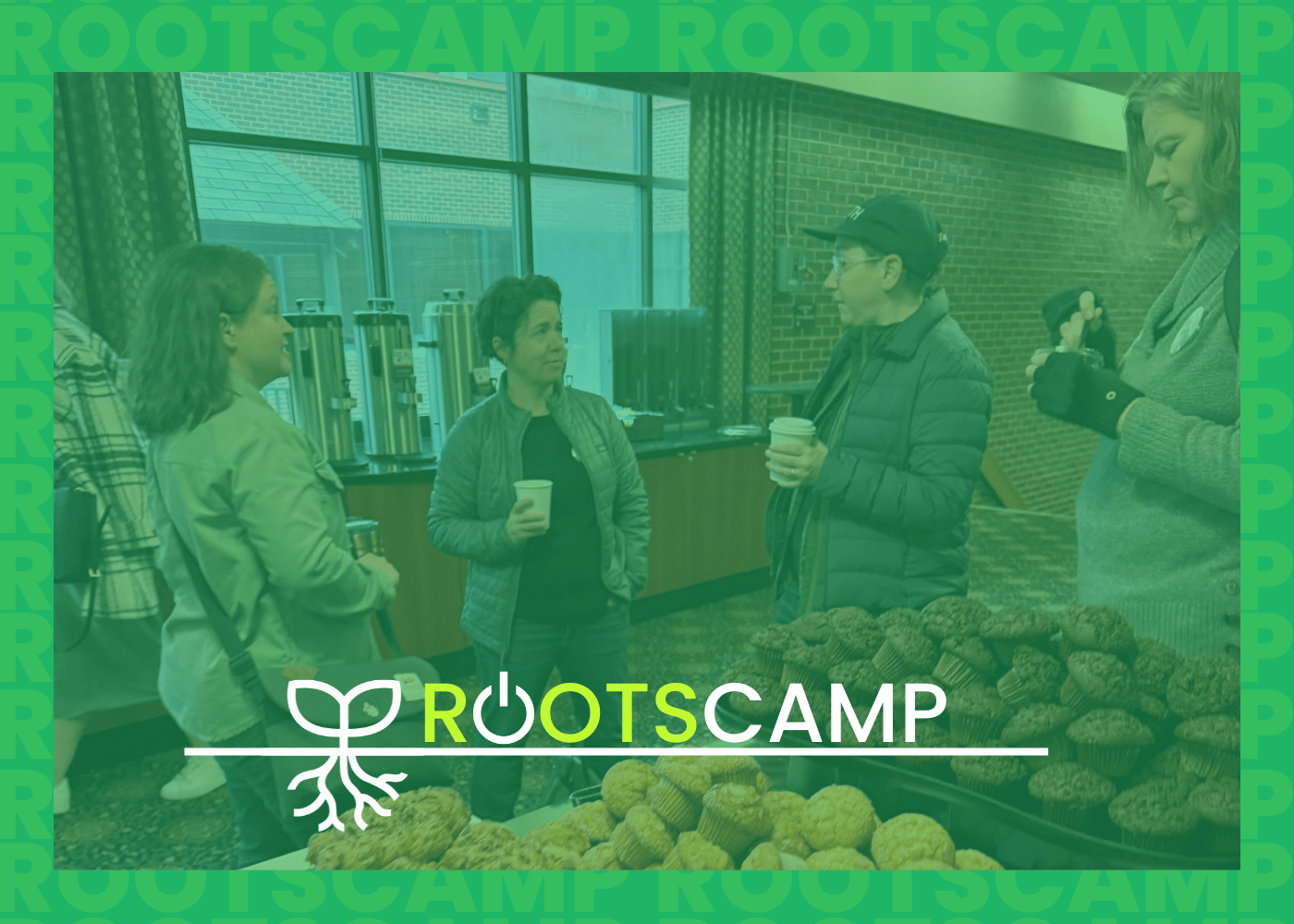
I confess, I’m a bit of a conference/training junkie. I love to network. I love hearing what our community has been up to, what people are doing that’s new and different. I love seeing old friends and meeting new ones. Whether it is America Votes State Summit, BISC’s Road Ahead, Netroots Nation, our own ROOTSCAMP, or others — I love a political conference. I love training. Julia Rosen inspired our last RootsCamp with this LinkedIn post in December after the 2024 elections.
Should we do it again???? We need more time to plan if we do. This survey is about more than RootsCamp but we ask about it there too. Please let us know what you think.
You couldn’t pay me to go back into a real office. But working from home can be really isolating, and Zoom just isn’t the same.
In-person events are expensive to attend and put on, but I’ve found my tribe at these events, been a sponge, learned, and gotten more intangible personal and professional value than I can describe. Organizing them with a small team and a little budget is exhausting and a bit scary.
Nobody Designed This For Us
Gregory Allan Datu Cendana and Carmen Berkley Anderson put it well in The Big Conference Is Broken (And Everyone Knows It), over at Culture of Convening: the format most of us inherited — plenary, breakouts, a closing session, half the room leaves before it starts. They are designed for the people on stage, not the people in the seats. Ask anyone what the best part of a conference was, and they’ll name a hallway conversation, not a session. I left a comment on that piece myself back in July, admitting that we tried to change RootsCamp and succeeded in some areas — but honestly, we fell back on a lot of the standard stuff too. Check them out for more great posts about convening/gathering
Haley Bash asks the harder question in If We Don’t Know Why We’re Gathering, Maybe We Shouldn’t: What is this event actually for, and who isn’t in the room? She points out that even Netroots Nation, the largest progressive conference there is, draws around 3,000 people — and of the hundreds of volunteer fundraisers her organization, Donor Organizer Hub, has trained, exactly zero have ever attended in person. A lot of our gatherings quietly become reunions for people who already have name badges, instead of on-ramps for the people who don’t.
What RootsCamp Is For
That’s the question I keep asking about RootsCamp itself: what is it actually for? It’s where we learn from each other after elections — what worked, what didn’t, how we do better next time. Since 2024, there have been unending reports from any number of organizations and leaders trying to answer that same question. I’ve learned more from RootsCamp than from all of them combined. And this cycle, that purpose matters more than most: we’re going to win some and lose some, and all of that assumes the President doesn’t try to cancel our elections outright, which many believe he is actively organizing to do.
I have a few theories about what RootsCamp should be. I want it to be a learning, bonding, transformative experience — one that leads to real, positive change: more wins, better organizations, new coalitions, new partners. I want it to inspire leadership from within, and make people feel like they aren’t alone, like they are leaders, like what they’ve done matters, and like they’re part of something bigger than what they’ve built on their own.
But those are my theories, and we’re already starting to plan our next RootsCamp. I don’t want to make anything definite without hearing yours first. Can we organize it more locally? Should we? What else should we be doing — or could we be doing — that we haven’t thought of yet? Keep reading, because here’s why I think the answer matters beyond just how it feels.
Belonging Is the Thing
Katrina Gamble’s research is the best evidence I’ve seen for that. In Micah Sifry’s piece on it, her study found that belonging was the single biggest predictor of whether disaffected people would take any form of civic action — moving from the lowest to the highest sense of belonging increased someone’s likelihood of voting by 25%. Not just showing up. Voting. That’s a movement outcome, not just a soul one.
Deva Woodly makes the historical case in Activating the Citizenry, for the Kettering Foundation. The civic organizations that flourished from the 1880s through the 1920s — the Elks, the Grange, the General Federation of Women’s Clubs, the National Association of Colored Women — built the social capital and political muscle that made the New Deal and the civil rights movement possible. Belonging didn’t just make people feel better. It built the infrastructure that won.
I go to protests for the same reason: to be in community with people who think like I do, to feel the energy of people showing up and fighting, and to give some of that energy back. I know I’m not alone in that.
I’m also so excited about what Rhonda Foxx has built along these lines: Civic, her cafe and cocktail salon on DC’s Barracks Row. Washingtonian reported that Foxx, after years of building a massive political coalition of women, asked herself why there wasn’t “a Butterworth’s for like-minded individuals.” So she built one — a room where the people who’d show up for each other already know where to find one another. And as Gregory and Carmen point out in There Are More Ways to Convene Than You Think, we don’t even have to build something new to get this — the farmers market, the barbershop, the pop-up already do it. We just have to notice what’s already working and use it.
What If We Just Did It
I spent a lot of time last year thinking about how we build third spaces for democracy — places where belonging happens on purpose, not by accident. What if we mapped them? What if we just did it? It doesn’t have to be a big event. It doesn’t have to cost a lot of money. What if we just did it?
That’s exactly why I’m committed to gathering. I believe forming networks is the key to our professional success, and that’s what GAIN Power is all about — building professional opportunity through the networks we create together.
I’ve thought seriously about hosting a convening and just calling it The Hallway. If the hallway conversation is the best part of every conference anyway, why not build the whole thing around that instead of pretending the plenary is the point?
So — back to the question I asked earlier. Can we organize RootsCamp more locally or does it have to be national? What else should we be doing? I don’t have it figured out, but I know the answer is good for more than just how we feel. Please, tell me what you think in our survey - here or join our RootsCamp Slack channel that I’m reviving with this post.
— Amy
Further reading, all in one place:
Gregory Allan Datu Cendana, The Big Conference Is Broken (And Everyone Knows It), Culture of Convening
Gregory Allan Datu Cendana and Carmen Berkley Anderson, There Are More Ways to Convene Than You Think, Culture of Convening
Haley Bash, If We Don’t Know Why We’re Gathering, Maybe We Shouldn’t
Micah Sifry on Katrina Gamble’s research, With Millions Disaffected From Politics..., The Connector
Deva Woodly, Activating the Citizenry: Why Third Spaces Are the Key to Saving Democracy, Kettering Foundation
Jessica Sidman, She Built a Massive Political Coalition of Women. Now She’s Building a Cafe and Bar., Washingtonian